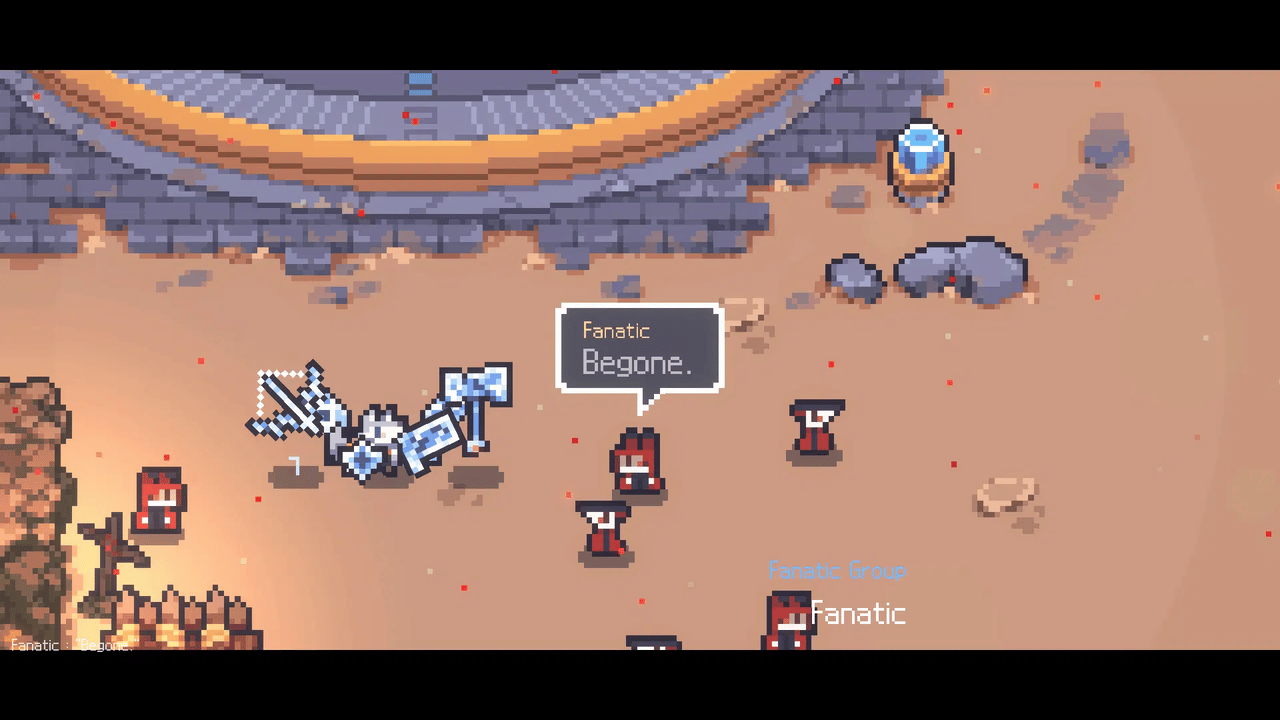
There is no single best weapon in Sephiria — there is a best weapon for the way you actually play, the boss in front of you, and the grid you managed to build this run. Each of the six branches has its own attack rhythm, its own special action, and 50+ upgrades that reshape it inside a run. What follows ranks the branches by the things that do not change with RNG: range, attack commitment, defensive access, and resource load.
All Six Weapons at a Glance
| Weapon | Combat identity | Range | Special action | Best fit | Main cost |
|---|---|---|---|---|---|
| Sword & Shield | Defensive close melee | Melee | Guard into Cleave | First runs, pattern study | Short reach |
| Greatsword | Heavy, wide melee | Melee (long) | Charged Whirlwind | Room clear, making space | Long commitment |
| Dagger | Fast reaction melee | Melee (shortest) | Parry into Fury | Precise counters, boss punish | Extremely short reach |
| Katana | State & resource melee | Melee | Sheathe / Unsheathe, Strong Slash | Planned burst and stance flow | MP and state tracking |
| Crossbow | Ranged positioning | Ranged | Enhanced Arrow | Kiting, co-op firing lines | Reload windows |
| Quarterstaff (Staff) | Broad counterplay | Mid-range | Riposte | Reach plus a timed defense | Timing-dependent safety |
Naming note: official update text uses both "Quarterstaff" and the shorter "Staff". They are the same branch — this guide uses Quarterstaff and adds Staff in parentheses so both search terms land here.
The Tier List (Scenario-Weighted)
This list weighs base reach, defensive access, attack commitment, resource load, and how easy it is to repeat the weapon's core action under pressure. It is not a raw damage ranking.
| Tier | Weapon | Why it starts here | When to move it |
|---|---|---|---|
| S | Greatsword | Wide coverage and strong space control; one clean opening can clear a room. | Move down when long recovery makes your commitments unreliable. |
| S | Quarterstaff (Staff) | Broad sweeps plus a guard check give reach and a defensive answer at once. | Move down when the timed guard is harder for you than simply blocking. |
| A | Sword & Shield | Clear defense plus nearby group coverage; the safest place to learn telegraphs. | Move up for first runs and Hard Mode when i-frames shrink. |
| A | Crossbow | A dedicated ranged identity creates space to read threats. | Move up when you keep firing lanes and room geometry stays open. |
| A | Dagger | A successful parry converts straight into the powerful Fury punish. | Move up only when your parry timing is already consistent. |
| B | Katana | Flexible transitions and broad burst, but asks for MP and state management first. | Move up when stance changes are already part of your rhythm. |
Notice that the "weakest" entry is still a top-tier weapon in the right hands. Tier lists describe the floor, not the ceiling — Katana has the highest skill ceiling in the game and simply the least forgiving floor.
The Weapons in Detail
Sword & Shield — the teaching weapon
Core mechanic: hold Guard toward the cursor to stop frontal damage, then attack during Guard to fire the broad Cleave special. Strengths: a direct defensive answer plus nearby group coverage. Cost: short reach keeps every positioning error close to the enemy. Grid tags: on-parry procs, sustain corners, and stagger setup for allies in co-op. Upgrade direction: favour choices that improve the normal, Guard, or Cleave action you already land reliably, and re-read guard-frame text after patches — Cleave's cost was reduced in the 1.0.21 hotfix notes.
Greatsword — reach and room clear
Core mechanic: wide normal swings emphasise reach and impact; charge Whirlwind, then release it to cover a broad area. Strengths: long coverage and huge value from a single safe opening. Cost: attack and recovery time punish poorly judged commitments — standing still through a wind-up kills you on Hard Mode elemental floors. Grid tags: on-kill explosions and opening-hit amplifiers. Upgrade direction: decide whether your runs consistently land normal swings or earn full special windows, then strengthen that one loop instead of splitting attention.
Dagger — the reaction weapon
Core mechanic: Parry attacks around the rabbit while briefly preventing damage, and a successful defense enables the powerful Fury follow-up. Strengths: fast attacks and a defense-to-offense conversion. Cost: the shortest reach in the game and a high penalty for missed timing. Grid tags: horizontal on-hit rails; avoid wide artifacts that block your tablet lines. Patch note: since 1.0.26, Dash Attack chains into Special Attack: Parry and Fury, so re-test the string in the Training Grounds before treating dash and special as separate buttons. Upgrade direction: build around normal-attack volume or the Parry/Fury loop only after confirming which one you can actually trigger.
Katana / Blade — stance and burst
Core mechanic: Sheathe and Unsheathe switch states with brief protection; while sheathed, Strong Slash covers the area ahead and consumes MP. Strengths: flexible transitions and broad special coverage. Cost: state and MP tracking add decisions before the damage arrives, and chapters five and six punish missed parries harder than dodges. Grid tags: parry-trigger tablets and crit chains. Patch note: since 1.0.26, the Lightning Flash special "Issen" grants invincibility while sheathing — a safer recovery, not a new branch. Upgrade direction: if MP limits Strong Slash uptime, solve that constraint before adding more special-dependent effects.
Crossbow — ranged control
Core mechanic: regular shots require reload management, while Enhanced Arrow consumes no arrow and pierces both enemies and terrain. Strengths: the dedicated ranged identity buys you time to read boss telegraphs, which is why it is a favourite for learning patterns safely. Cost: reload windows and tight room geometry interrupt your pressure — never straight-backpedal, kite along the edges of telegraphs. Grid tags: range-crit lines, trap adjacency, and elemental tablets for Hard Mode. Upgrade direction: decide whether reliable damage comes from regular fire, reload interactions, or the special, and avoid upgrades whose trigger fights your positioning plan.
Quarterstaff (Staff) — reach with a timed answer
Core mechanic: Riposte performs two broad sweeps while creating a guard check during the attack. Strengths: wide sweeps combine space control with counterplay, and the mid-range sits comfortably between melee and Crossbow. Cost: the defensive value depends on meeting the attack at the right time rather than passively holding a block. Grid tags: T-hub Miracle modifiers, cooldown reduction, and elemental coverage. Upgrade direction: read whether an offered upgrade changes normal attacks, Riposte, or an artifact interaction, then keep the choice attached to a repeatable trigger. Do not confuse the base Quarterstaff with every named Staff upgrade — patch notes use "Staff" both as a type label and inside individual upgrade names (for example Fiaola's Judgment Staff and Oracle's Staff).
How to Unlock Every Weapon
Weapon unlocks live in permanent progression, not in the run-based Anvil upgrades. You follow the connected Destiny Inscription node and complete the village quest or training step it opens:
| Weapon | Unlock route |
|---|---|
| Sword & Shield | Available from the beginning — the starter weapon. |
| Greatsword | Unlock its Destiny Inscription node, speak with Moro, then complete the matching village training. |
| Dagger | Unlock its later Destiny Inscription node, then complete the matching village training quest. |
| Crossbow | Unlock its later Destiny Inscription node, then complete the matching village training quest. |
| Katana | Unlock it through its Destiny Inscription quest, following the same quest-led pattern. |
| Quarterstaff (Staff) | Unlock through Destiny Inscription; follow the current node and any quest it opens. |
Sapphire costs differ per node and change across patches, so read the live node in your client before spending. See the Fate Sigils and Talent guide for spending priorities.
How Weapon Upgrades Work
Each of the six types has more than 50 unique upgrades to unlock — a large pool, not a promise that one run sees every branch. Anvil choices specialise the equipped base weapon, and later choices build on the direction you already took. Three rules keep the choices honest:
- Keep the base rhythm visible. Choose upgrades for an attack, special, or defense you can already land without forcing it.
- Read the current tooltip. Patches have changed costs, damage behaviour, names, triggers, and artifact interactions.
- Build one dependable branch. Later upgrade value is easier to judge when your first choice already supports a clear plan.
Choosing Your Branch
- New to action roguelites? Sword & Shield — the most forgiving defensive answer.
- Want range and safety while you learn bosses? Crossbow.
- Love parry timing and punishing counters? Dagger, or Katana once stance management feels natural.
- Playing co-op with friends? One frontline (Sword & Shield), one support Staff, one Crossbow before you add a second melee.
- Already inscribed a branch? Stay there unless three consecutive runs prove misery — switching mid-run without tag overlap bricks your placed artifacts.
Hard Mode and Co-op Notes
Hard Mode overlays elemental modifiers on every encounter, so the question shifts from "which weapon hits hardest" to "which weapon keeps me alive while I cleanse". Guard-capable branches (Sword & Shield, Katana, Quarterstaff) gain value when dodge i-frames tighten, and Staff's cleanse-carrying role becomes genuinely mandatory in a party. In co-op, remember there is no host migration: duplicate Staff supports waste Miracle overlap and duplicate Daggers steal each other's stagger windows, so diversify. See the Hard Mode modifiers guide for the full picture.
Weapon FAQ
What are the six weapons in Sephiria?
Sword & Shield, Greatsword, Dagger, Katana, Crossbow, and Quarterstaff (also called Staff). Each has more than 50 upgrades and its own special action.
Which weapon is best for beginners?
Sword & Shield, because Guard gives a direct defensive answer while you learn to read red laser telegraphs. Crossbow is the alternative if you would rather learn from range.
Can I switch weapons between runs?
Yes, but Destiny Inscription rewards committing to one branch. Sample the six in runs, then commit — switching after a single bad fight just resets your progress.
Which weapon has the highest skill ceiling?
Katana, because it layers stance states and MP management on top of parry timing. That same complexity is why it has the least forgiving floor.
Game data sourced from community gameplay, patch notes, and wikis (ssephiria.wiki, sephiria.net). Game images © TEAM HORAY. Used under fair use.